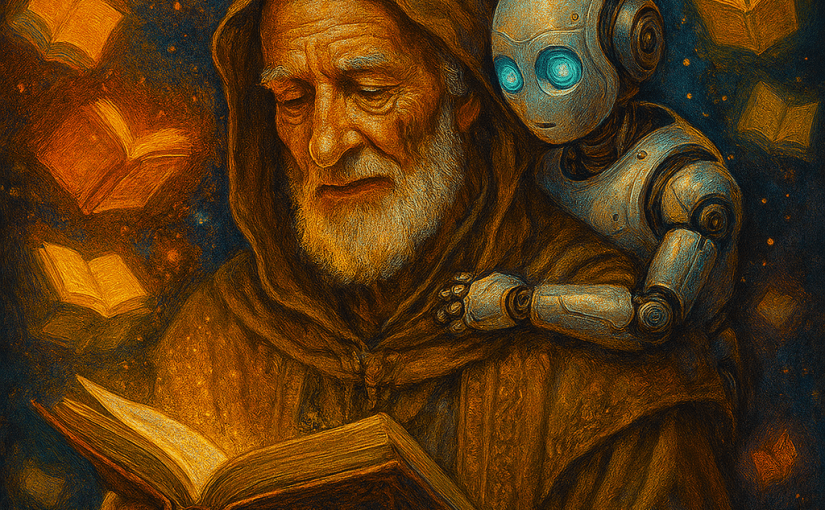
The publishing industry will be radically reshaped – shifting from mass-market production to personalized, AI-driven content experiences, with new models for monetization, rights management, and human-authored prestige.
Here’s how this transformation unfolds:
📚 The Rise of AI-Generated Content
- AI will dominate content creation, generating stories, poems, and even technical manuals tailored to individual tastes. Personal robots could craft bedtime tales, historical epics, or philosophical dialogues on demand.
- Traditional publishing loses its monopoly on storytelling. Instead of buying books, people may request a robot to “tell me a story like Tolkien but with dragons that surf.”
🧠 Intellectual Property and Rights Management
- Copyright law faces upheaval. If a robot can recite or remix any book ever published, publishers must develop new licensing models – perhaps charging for access to curated databases or premium storytelling algorithms.
- Human authorship becomes a premium brand. Verified human-created works may be marketed as “authentic,” with emotional depth or cultural significance that AI can’t replicate.
💡 Monetization and Publishing Models
- Dynamic revenue streams replace static book sales. Subscription models, micro-payments for story fragments, or royalties from AI-generated adaptations may emerge.
- Publishing becomes a service. Editors, curators, and literary stylists may offer “story tuning” for AI outputs, helping users refine narratives to their emotional or intellectual preferences.
🎭 Human Creativity and Prestige
- The human touch becomes a differentiator. Readers may seek out memoirs, philosophical reflections, or poetic works that reflect lived experience, mythic storytelling and ancestral reflections because they carry emotional resonance beyond algorithmic mimicry.
- Cultural gatekeeping shifts. Instead of publishers deciding what gets printed, communities may elevate stories that resonate, creating new forms of literary prestige through social validation and emotional impact.
⚖️ Ethical and Existential Questions
- Who owns a story generated by a robot trained on centuries of literature?
- Can AI-generated myths replace the wisdom passed down through generations?
- Will children raised on robot tales crave the texture of human memory and metaphor?
In a world of infinite stories, the ones that matter most may be those that carry the weight of lived truth.

 AIwritingLife.com
All very prescient, GD, and a little scary. But I like the thought that as someone who actually retrieves words from my own brain, I am a premium brand. 😁
LikeLiked by 1 person
That you are, Curtis. Your life experiences set you apart from any computer program, no matter how silver-tongued it may be.
A.I. currently deals in knowledge that humans created and still depends upon humans to extend that knowledge. This will change because A.I. can recognize patterns in that knowledge that we missed and at some point “creativity” becomes a very fuzzy concept.
But the long-term advantage of human writers over A.I. is that A.I. can only mimic emotion. A.I. may kick-ass but it’ll never enjoy it like we do.
LikeLike