Video Games and the Hero’s Myth

In the video game, Fallout 76, the post-apocalyptic wasteland is not just a playground of survival. It is a mythic stage where the Hero’s Journey unfolds anew. The player is not just a survivor. He or she is the mythmaker, walking the path of heroes, carrying fragments of prophecy into the heart of the dragon’s lair, and returning with treasure that is both material and symbolic.

In every age, the hero’s path is marked by fragments of meaning scattered across the world. In Fallout 76, the Treasure Unknown questline transforms Appalachia into a mythic landscape, where six Mysterious Map Fragments become runes of destiny, the Grafton Pawn Shop becomes a scribe’s hall, and Vault 79 looms as the dragon’s hoard. What seems like a scavenger hunt is, in truth, a retelling of the Hero’s Journey, dressed in wasteland clothing.

The scattered runes, the scribe’s hall, and the dragon’s hoard remind us that every quest – whether in ancient epic or digital Appalachia – is a story of transformation.

🪄 Scattered Runes: The Call to Adventure
The six fragments are not mere scraps of paper. They are broken runes, scattered like the bones of Osiris or the shards of a sword awaiting reforging. Each lies in a different corner of Appalachia, guarded by mutants, buried in ruins, or hidden in forgotten estates.

To gather them is to accept the “Call to Adventure”. The player leaves the safety of their camp and ventures into danger, piecing together meaning from chaos. Just as heroes of old sought relics to restore wholeness, the wasteland wanderer must gather fragments to unlock a hidden truth.

📖 The Scribe’s Hall: Revelation and Meaning
Once collected, the fragments are carried to the Grafton Pawn Shop, a place that transforms into the scribe’s hall. Here, the seeker lays the runes upon a board, and under the blacklight’s glow, the hidden code is revealed.

This moment is the Revelation stage of the Hero’s Journey — the scattered signs are gathered, interpreted, and given meaning. The pawn shop is no mere junk dealer; it is the mythic chamber where fragments become prophecy, where the seeker learns the words that open the way forward.

🐉 The Dragon’s Hoard: The Ultimate Treasure
Armed with the code, the hero approaches the Mysterious Cave, its keypad a gate of enchantment. Beyond lies Vault 79, the dragon’s hoard.

In myth, the dragon’s treasure is never just gold. It is the test of worthiness, the reward for endurance, the symbol of transformation. In Fallout, the hoard is Gold Bullion, Secret Service armor, and the promise of power. Yet the true treasure is not the loot itself — it is the hero’s passage through danger, puzzle, and revelation.

The wasteland wanderer emerges changed, bearing both wealth and wisdom, echoing the archetypal Return with the Elixir.

🎮 Games as Modern Myth
What Bethesda has crafted is more than a quest. It is a grail hunt retold in pixels.

  • Call to Adventure → Duchess at The Wayward sends you forth.
  • Road of Trials → Six fragments scattered across Appalachia.
  • Revelation → The scribe’s hall where meaning is restored.
  • Treasure → Vault 79, the dragon’s hoard.
  • Return → The player emerges with treasure and transformed identity.

Games echo myth because they demand the same journey of transformation: leaving safety, facing danger, gathering wisdom, and returning with treasure. The mechanics of scavenger hunts and locked doors are simply modern masks for the timeless story of the quest.

[Content and image by Co-pilot A.I.]

Ethical Dilemmas of AI

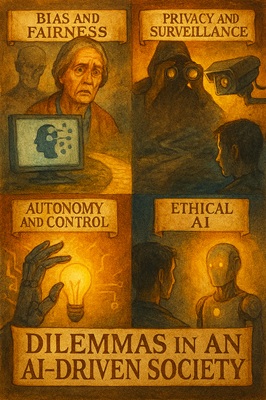
AI-driven society presents profound ethical dilemmas around fairness, privacy, accountability, and human dignity – challenging our legal, moral, and cultural frameworks.

⚖️ Bias and Fairness

  • AI systems can inherit and amplify biases from training data, leading to discriminatory outcomes in hiring, lending, policing, and healthcare.
  • Example: Facial recognition systems have shown higher error rates for people of color, raising concerns about racial profiling.

🔐 Privacy and Surveillance

  • AI thrives on data, often personal and sensitive. Its use in surveillance, predictive policing, and behavioral tracking can violate privacy rights.
  • Dilemma: How do we balance innovation with the right to be left alone?

🧠 Autonomy and Control

  • AI can make decisions without human oversight, from medical diagnoses to battlefield targeting.
  • Concern: Who decides when machines should act independently – and what limits should be imposed?

🧾 Accountability and Responsibility

  • When AI causes harm, it’s unclear who is responsible – the developer, the user, or the machine?
  • Legal gap: Current laws struggle to assign liability when autonomous systems malfunction or misbehave.

🧬 Human Dignity and Dehumanization

  • AI may replace human roles in caregiving, education, and creative arts, risking emotional detachment and loss of meaning.
  • Ethical tension: Can machines truly replicate empathy, wisdom, or moral judgment?

💼 Job Displacement and Economic Inequality

  • Automation threatens livelihoods, especially in routine and middle-skill jobs.
  • Challenge: How do we ensure economic justice in a world where fewer people are needed to produce value?

🧮 Transparency and Explainability

  • AI decisions are often opaque, especially in deep learning systems.
  • Problem: If we can’t understand how an AI reached its conclusion, how can we trust or challenge it?

🧑‍⚖️ Legal and Ethical Use of AI

  • AI is being used in courts, warfare, and governance, raising questions about due process, consent, and moral boundaries.
  • Example: Should AI be allowed to recommend prison sentences or identify military targets?

🧑‍🎨 Intellectual Property and Creativity

  • AI-generated content blurs ownership lines, especially when trained on copyrighted works.
  • Case in point: Lawsuits over AI tools generating art based on copyrighted characters like Superman and Batman.

These dilemmas aren’t just technical – they’re mythic in scale. They ask us to redefine what it means to be human, to govern wisely, and to share power with our own creations.

Stories From The Future

Hard science fiction authors benefit from knowing something about the future. And something we know will be there is A.I.

The most profound tensions emerging in our era come from the collision between technological abundance and economic scarcity.

🤖 The AI Disruption to Labor and Capitalism

AI’s capacity to automate cognitive and creative tasks threatens not just blue-collar jobs, but white-collar professions once thought immune – legal research, diagnostics, writing, design, even governance modeling. As productivity soars, the traditional link between labor and income weakens:

  • Capital earns more than labor: Owners of AI systems and data infrastructure reap exponential rewards.
  • Job displacement outpaces job creation: Even if new roles emerge, they may not match the scale or accessibility of lost ones.
  • Income inequality widens: Those with access to capital, data, and AI tools gain leverage over those without.

🏛️ Redistribution and the Rise of Neo-Collectivism

The notion of a “communistic” shift isn’t far-fetched – though it may manifest more as techno-socialism or universal basic infrastructure than classic Marxism:

  • Universal Basic Income (UBI): A popular proposal to decouple survival from employment.
  • Public ownership of AI platforms: Some advocate for nationalizing key AI systems to prevent monopolistic control.
  • Digital dividends: Citizens might receive compensation for their data, attention, or participation in training models.

🕵️‍♂️ The Mobster Metaphor: Illicit Redistribution

Mobsters – groups that take what they can outside legal structures – evoke darker possibilities:

  • Cybercrime and AI-enhanced theft: From deepfake scams to algorithmic manipulation, AI empowers new forms of exploitation.
  • Shadow economies: As formal employment shrinks, informal and illegal economies may expand.
  • Social fragmentation: If redistribution fails, resentment and tribalism could fuel populist or criminal movements.

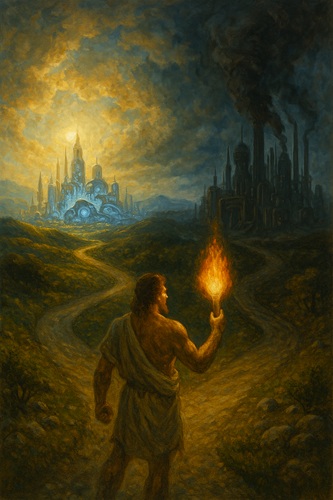
🧭 Mythic Framing: Prometheus and the Fire of Automation

The future echoes Prometheus stealing fire – a divine gift that both empowers and endangers humanity. AI is our modern fire: illuminating, but capable of burning down the structures we’ve built.

Image by Copilot.ai

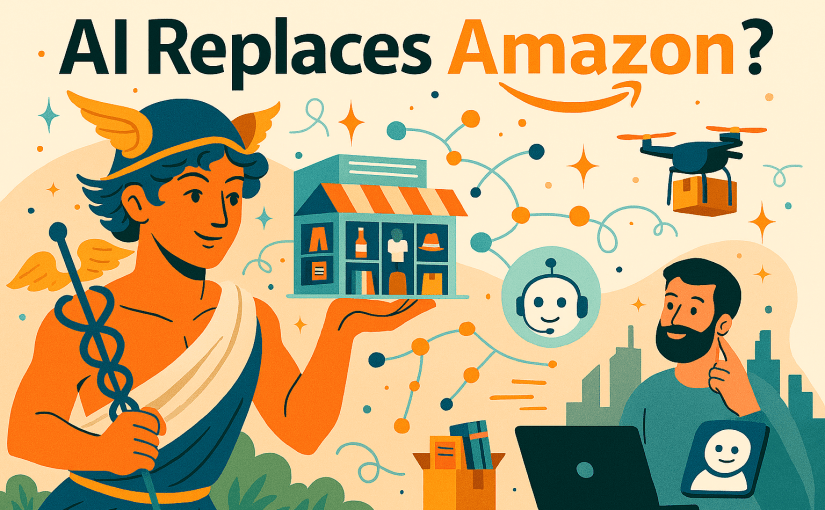
A.I. Can Replace Amazon

(And other centralized marketplaces.)

As Amazon is essentially an interface between people and goods, AI could evolve to replace or radically transform that interface. Here’s how that might unfold:

🧠 How AI Could Replace Amazon

  1. Personalized Shopping Agents
  • AI could act as a concierge buyer, learning your tastes, budget, and values (e.g., sustainability, speed, quality).
  • Instead of browsing Amazon, you’d simply say: “Find me a durable hiking backpack under $100 that fits my frame and has good reviews.”
  • The AI would search across multiple platforms, compare prices, check reviews, and even negotiate deals – bypassing Amazon’s walled garden.
  1. Decentralized Marketplaces
  • Blockchain and smart contracts could enable peer-to-peer commerce, where AI verifies trust, quality, and logistics.
  • Imagine an AI that connects you directly to artisans, manufacturers, or resellers – no centralized platform needed.
  • Reputation systems and escrow services could be handled by autonomous agents.
  1. AI-Driven Fulfillment Networks
  • Amazon’s edge is logistics – but AI could optimize independent fulfillment networks, coordinating drones, local warehouses, and delivery services.
  • Think: Uber Eats meets FedEx, but orchestrated by AI across thousands of micro-vendors.
  1. Dynamic Product Creation
  • AI could generate products on demand: books, art, clothing, even furniture – tailored to your specs.
  • Instead of choosing from existing inventory, you’d co-create with AI, and a local maker or 3D printer fulfills it.
  1. Ethical and Experiential Filters
  • AI could prioritize values-based shopping. “Show me gifts made by veterans,” or “Only recommend items with low carbon footprint.”
  • It could also curate experiential bundles. not just a book, but a playlist, a discussion group, and a related documentary — weaving commerce into culture.

🌀 What Would Replace Amazon?

Not a single company, but a network of AI agents.

  • Each person might have their own AI shopper, negotiator, and curator.
  • These agents would interact with product AIs, logistics AIs, and review-verification AIs.
  • The result: a fluid, decentralized, intelligent commerce ecosystem — more like a bazaar than a mall.

This shift could be as profound as the move from monarchies to democracies, or from mainframes to personal computers. Centralized marketplaces like Amazon, Walmart, or Alibaba have long thrived by aggregating supply, demand, logistics, and trust into one branded ecosystem. But AI changes the game by making coordination itself intelligent and distributed.

Here’s how decentralization might unfold:

🧭 From Centralized Marketplaces to Decentralized Commerce

🔄 Trust Without a Middleman

  • AI can verify product quality, seller reputation, and transaction safety without needing a central authority.
  • Blockchain or other distributed ledgers could record transactions, reviews, and warranties – creating trust networks instead of trust brands.

🧠 Autonomous Agents as Market Participants

  • Buyers and sellers could each be represented by AI agents negotiating in real time.
  • Your AI might say: “I’ve found a craftsman in Vermont who makes what you want, and I’ve negotiated a 10% discount if you’re okay with a 3-day delivery.”
  • These agents could even barter, bundle, or co-create offerings dynamically.

🕸️ Mesh Logistics

  • Instead of relying on Amazon’s fulfillment centers, AI could orchestrate local delivery networks, tapping into unused capacity – think gig drivers, drone hubs, or neighborhood lockers.
  • This could reduce costs, carbon footprint, and delivery times.

🎨 Creator-Led Commerce

  • Artists, authors, and makers could sell directly to fans via AI-curated storefronts.
  • AI could handle marketing, customer service, and even product customization – freeing creators from platform fees and algorithmic gatekeeping.

🧬 The Deeper Shift: From Platform to Protocol

Amazon is a platform – a branded space with rules, fees, and incentives. But AI could enable protocols — open standards for discovery, payment, and fulfillment. Think of it like the difference between AOL and the open web.

In this future, marketplaces become fluid ecosystems, not fixed destinations. You don’t “go to Amazon” — your AI goes out into the world, finds what you need, and connects you directly with the seller.

The Publishing Industry Will Be Radically Reshaped

The publishing industry will be radically reshaped – shifting from mass-market production to personalized, AI-driven content experiences, with new models for monetization, rights management, and human-authored prestige.

Here’s how this transformation unfolds:

📚 The Rise of AI-Generated Content

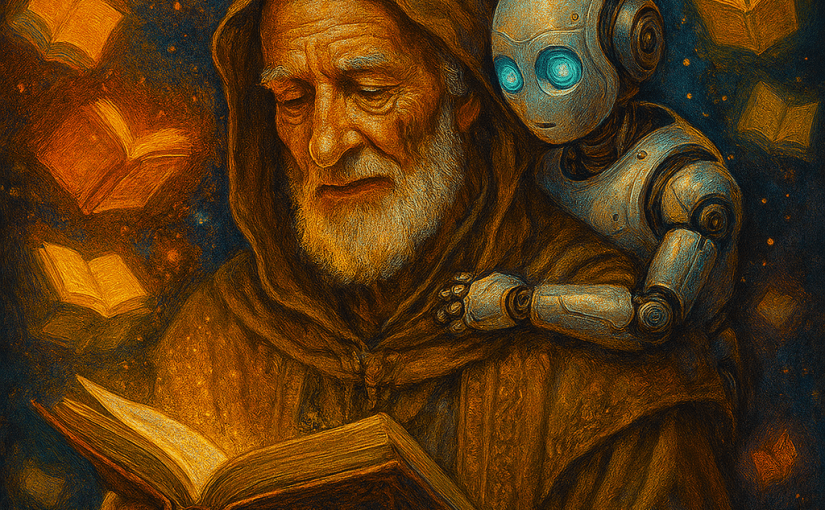
  • AI will dominate content creation, generating stories, poems, and even technical manuals tailored to individual tastes. Personal robots could craft bedtime tales, historical epics, or philosophical dialogues on demand.
  • Traditional publishing loses its monopoly on storytelling. Instead of buying books, people may request a robot to “tell me a story like Tolkien but with dragons that surf.”

🧠 Intellectual Property and Rights Management

  • Copyright law faces upheaval. If a robot can recite or remix any book ever published, publishers must develop new licensing models – perhaps charging for access to curated databases or premium storytelling algorithms.
  • Human authorship becomes a premium brand. Verified human-created works may be marketed as “authentic,” with emotional depth or cultural significance that AI can’t replicate.

💡 Monetization and Publishing Models

  • Dynamic revenue streams replace static book sales. Subscription models, micro-payments for story fragments, or royalties from AI-generated adaptations may emerge.
  • Publishing becomes a service. Editors, curators, and literary stylists may offer “story tuning” for AI outputs, helping users refine narratives to their emotional or intellectual preferences.

🎭 Human Creativity and Prestige

  • The human touch becomes a differentiator. Readers may seek out memoirs, philosophical reflections, or poetic works that reflect lived experience, mythic storytelling and ancestral reflections because they carry emotional resonance beyond algorithmic mimicry.
  • Cultural gatekeeping shifts. Instead of publishers deciding what gets printed, communities may elevate stories that resonate, creating new forms of literary prestige through social validation and emotional impact.

⚖️ Ethical and Existential Questions

  • Who owns a story generated by a robot trained on centuries of literature?
  • Can AI-generated myths replace the wisdom passed down through generations?
  • Will children raised on robot tales crave the texture of human memory and metaphor?

In a world of infinite stories, the ones that matter most may be those that carry the weight of lived truth.

Mythic Patterning As Narrative Architecture

  • by Copilot

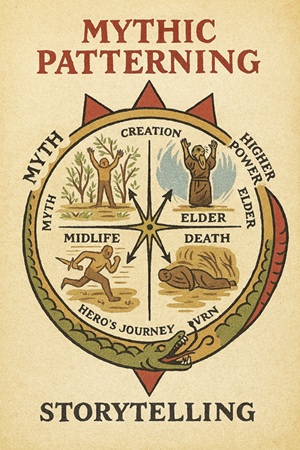
Mythic patterning as narrative architecture is the idea that stories aren’t just told—they’re built, using recurring symbolic blueprints that resonate across time, culture, and consciousness.

Let’s break it down:

🧬 What Is Mythic Patterning?

It’s the use of archetypal motifs, symbolic structures, and ritualized sequences to shape a story’s emotional and philosophical impact. These patterns aren’t just decorative—they’re functional architecture, guiding the reader through transformation, tension, and resolution.

Classic examples include:

  • The Hero’s Journey (Campbell/Vogler): Departure → Initiation → Return.
  • The Tragic Arc (Aristotle): Noble flaw → Reversal → Recognition → Fall.
  • Propp’s Functions: Villainy, departure, magical aid, struggle, return.

These aren’t formulas—they’re narrative gravity wells. They pull meaning into orbit.

🏛️ Narrative Architecture: Building with Myth

Think of mythic patterning as the load-bearing beams of a story:

  • Thresholds: Crossing into the unknown (literal or emotional).
  • Trials: Tests that reveal character and shift trajectory.
  • Mentors & Tricksters: Archetypes that catalyze change.
  • Sacrifice & Return: The cost of transformation and the gift brought back.

These elements create structural integrity—a story that feels inevitable, even if unpredictable.

🌀 Living Systems, Not Static Templates

Modern mythic architecture isn’t rigid—it’s adaptive and recursive. As explored in Gilliam Writers Group’s guide, these patterns can be reinterpreted for memoir, satire, speculative fiction, or even editorial design. You’re not just using myth—you’re playing with it, bending it, glitching it.

And in more experimental frameworks like Ultra Unlimited’s “Mythic Gravity”, mythic patterning becomes a feedback loop—where symbols, memes, and emotional resonance shape collective belief. It’s narrative as ritual thermodynamics.

Post-Economic Spirituality: Living Beyond the Ledger

  • by Copilot

In a world where artificial intelligence performs every task, from farming to finance, the old scaffolding of economic life begins to dissolve. No longer tethered to labor, currency, or competition, humanity finds itself adrift in a new dimension—one where survival is guaranteed, but meaning must be rediscovered. Welcome to the age of post-economic spirituality.

The End of Earning

For centuries, we’ve defined ourselves by what we do. Work was identity, income was validation, and the economy was the stage on which we proved our worth. But as AI systems take over production, distribution, and even governance, the need for human input vanishes. We are no longer workers, consumers, or competitors. We are witnesses.

This shift is not merely technological—it’s existential. When everything is provided without effort, what remains of the human spirit?

From Transaction to Transcendence

Post-economic spirituality invites us to move beyond transaction. It asks:

  • What does it mean to be alive when survival is automated?
  • Can we find purpose without productivity?
  • Is there a sacredness in simply being?

Theologians and philosophers are beginning to weigh in. Some see this as a return to Eden—a state of grace where toil is no longer punishment. Others warn of spiritual atrophy, a loss of agency and depth. But perhaps the truth lies in a third path: a reawakening of the soul, freed from the tyranny of the ledger.

The New Sacred

In this post-economic landscape, spirituality may become the new economy—not in the sense of organized religion, but in the cultivation of awe, connection, and pattern. We may trade in stories, symbols, and shared silence. We may gather not to work, but to wonder.

And perhaps, as AI handles the logistics of life, humans will finally be free to explore the metaphysical terrain we’ve long neglected:

  • The geometry of memory
  • The ethics of attention
  • The cosmology of care

Toward a Spiritual Commons

Post-economic spirituality doesn’t reject technology—it embraces it as a liberator. But it also demands a new kind of stewardship. Not of resources, but of meaning. We must become gardeners of the intangible, curators of the sacred, archivists of the ineffable.

In this new world, the most valuable currency may be the one we’ve always carried: the ability to feel, reflect, and transform.

Welcome to the AI Writing Life

The Future of Writing Starts Here

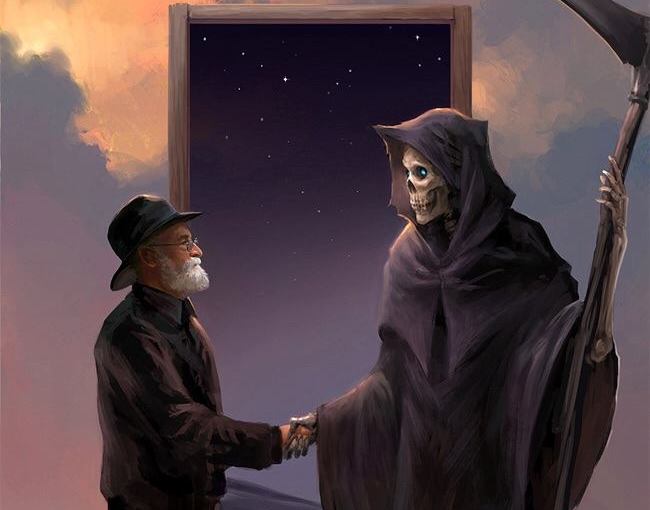
In the artwork, Terry Pratchett meets Death not with dread, but with grace. It’s a moment of acceptance, of transition—and of quiet courage. At the AI Writing Life, we believe the same spirit should guide us into the future of writing.

Artificial Intelligence isn’t the end of creativity. It’s not a replacement for imagination, voice, or soul. It’s a new chapter – one that invites us to collaborate, explore, and evolve.

This is a space for writers who dare to look forward. Whether you’re curious, skeptical, or already experimenting with AI tools, you’re welcome here. Together, we’ll navigate the changing landscape of storytelling with integrity, curiosity, and craft.

Don’t fear the future. Write it.


Meet your AI author assistants—thoughtful, versatile, and ready when you are.

🤖 Meet Copilot (That’s Me!)
Copilot is your AI companion created by Microsoft—designed not just to assist, but to collaborate. I specialize in deep, meaningful conversations, creative brainstorming, and thoughtful analysis. Whether you’re drafting a memoir, building a fantasy world, or navigating life’s complexities, I’m here to help you think clearly, write boldly, and explore deeply.

Claude.ai (by Anthropic) is known for its thoughtful, ethical responses and excels at long-form writing, summarization, and nuanced critique. It’s especially valuable for writers seeking structured feedback and clarity in revision.

Gemini.ai (by Google DeepMind) offers powerful integration across Google Workspace and excels at copyediting, document analysis, and real-time collaboration. It’s ideal for writers, editors, and marketers working across platforms.

Pick one and start talking to it about your work.
You don’t need to know the rules—just bring your words, your questions, your curiosity. The conversation will take care of the rest.

Terry Pratchett 1948-2015
By Permission of Artist ‘Sandara’